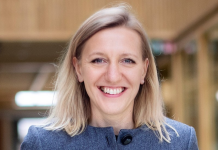

When Alex Rinke was a university student in Munich, he wasn’t looking to start a company. He was just trying to help a local business understand its IT systems. But what started as a student consulting project turned into a product that mapped how work really moved inside companies, not just how leaders thought it moved. That insight would eventually grow into Celonis, a process intelligence platform now used by over a thousand global enterprises to find and fix inefficiencies in their operations. Their first project partner became their first client. Siemens came shortly after. Then Bayer. And Rinke was just 22.
Celonis emerged from the digital clutter most companies already had: a tangled web of ERP systems, procurement tools, cloud apps, and legacy software. Rinke’s bet was direct: that buried in those logs was a roadmap for improvement. The team bootstrapped the company for five years, staying close to customers and focusing on practical use cases. That early constraint shaped their culture: customer-obsessed and execution-first. "Vision without execution is just hallucination,"—that’s the statement on his LinkedIn profile, and is one that drives him.
Scaling, for Rinke, starts with systems. "You have to learn to create systems that work independently of you," he’s said. He started out doing sales and staying close to early customers. But to grow, he had to step back and build teams that could move faster than he could alone. His hiring framework is anchored in what he calls the three Cs: character, commitment, and capability, in that order. Capability, he believes, can be taught. The others can’t.
Today, Rinke leads Celonis as co-CEO, balancing global scale with constant iteration. He talks often about building systems that reduce friction—not just to improve margins, but to unlock human potential. His approach to AI is pragmatic: it’s only useful if grounded in process data. His view on sustainability is the same. “I think [sustainability] is a real challenge, but it’s also an opportunity—to drive change,” he’s said. One customer used Celonis to track carbon output across its supply chain. For Rinke, that’s the work: building tools that help people act faster and better.
Celonis continues to expand across sectors and geographies, offering prebuilt solutions across industries while maintaining a system-agnostic core. The company has since reached decacorn status and closed the first-ever $1 billion Series D. “Every process in the world is waiting to be improved,” he’s said. And he’s helping build the tools to make that happen.